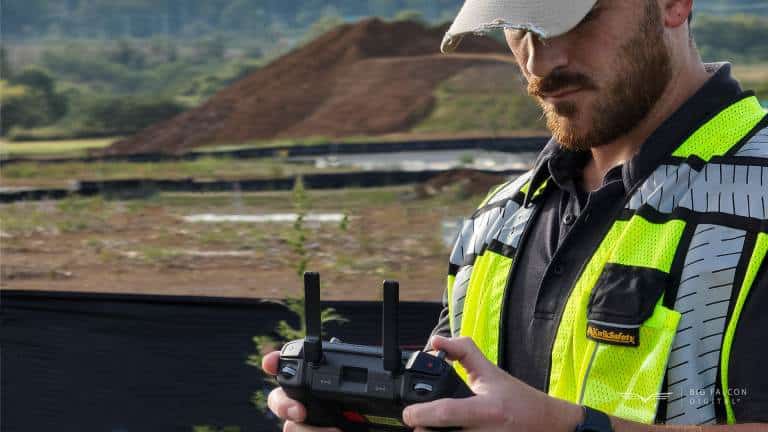


Using drone services for construction? Let’s talk about something that’s been sending ripples through construction teams across the country: DJI’s new drones just got banned.
No, not hypothetically. Although DJI was added to the FCC’s Covered List back in 2023, the ban on using DJI products in federally funded projects officially took effect on December 23, 2025. And if your business relies on aerial data to make smarter decisions (which it should), this change hits close to home.
But let’s cut through the noise. What does this actually mean for drone services for construction? What should you do if you’re a land developer or a GC running multiple projects?
Let’s unpack this together—with clarity, not panic.
What Is the DJI Ban—Really?
The FCC’s Covered List is essentially a national security filter. It restricts companies—mostly foreign manufacturers—from selling products that use federally subsidized communications infrastructure. DJI is now on that list.
So while you can still buy and fly a DJI drone for now, here’s the real problem:
This move paves the way for broader restrictions. And it immediately impacts projects that involve federal or state funding, especially in construction, infrastructure, and land development.
You’ve heard the saying: “When the rules change, don’t argue—adapt.” This is one of those moments.
Why It Matters for Drone Services for Construction
Here’s the truth: DJI drones have power an estimated 90% of the aerial data on American construction sites (Source: Construction Executive). They’ve been affordable, reliable, and packed with features that help capture everything from progress photos to precise volumetric measurements.
But with DJI now flagged, here’s how this affects your construction workflows:
- Compliance Risk: If you’re bidding on public-sector projects, using DJI could disqualify you or raise legal red flags.
- Operational Risk: Future bans could restrict parts, repairs, or software updates. That’s a ticking clock on your fleet.
- Strategic Risk: Your entire drone workflow—data collection, site tracking, reporting—might be dependent on tech that’s now under scrutiny.
If you’re feeling the pressure, you’re not alone. In fact, a growing number of general contractors are re-evaluating whether they should own and manage their own drone fleets at all.
“Do we want to keep maintaining a drone fleet—or do we want reliable aerial data without the hassle?”
— Construction executive (Source: Arch Aerial)
That question right there? It’s the pivot point.
What Should Land Developers Do Now?
If you’re developing land, especially in greenfield projects, here’s the opportunity buried in this challenge:
Audit Your Current Drone Workflow
Ask your team: Are we dependent on DJI hardware or software? If so, you need a phase-out plan—not tomorrow, but now.
For new bids and new tech requirements, shift to NDAA-Compliant Drones or Trusted Providers
Providers like Big Falcon Digital already specialize in drone services for construction and offer high quality topographical mapping and stockpile volume measurements.
Prioritize Consistent, Usable Data
Don’t fall into the “brand name” trap. What matters is the data—how accurate it is, how fast you get it, and how well it integrates into your planning tools.
Protect Your Project Timeline
Switching providers mid-project can delay deliverables. Start planning now for a seamless transition to a compliant, full-service drone partner.
What Should General Contractors Do Now?
If you’re a GC, you’ve got a different kind of fire to put out: multiple sites, mixed fleets, and stakeholders who need consistent reporting.
Here’s what you do:
Reconsider Fleet Ownership
Managing drones in-house means staying on top of regulations, pilot certifications, hardware updates, and software compatibility. With DJI now in question, ask yourself: Is that really the best use of your resources?
Partner with a Drone Services Provider
Companies like Big Falcon Digital offer full-service drone services for construction, including topography mapping verification, volumetric tracking, and marketing-ready visuals. You get the data you need, when you need it—without the hardware risk.
Standardize Across Jobsites
Working with a single service provider means consistent reporting formats across all projects and regions. It eliminates friction and improves visibility across your portfolio.
Plan for the Long Game
DJI’s ban is likely just the beginning. Position your workflows now so you’re not scrambling six months from now.
Final Thought: It’s Not About the Drone—It’s About the Data
Here’s the mindset shift: You’re not in the drone business—you’re in the insights business.
Drones are just tools. What matters is how you use the data they collect to make better decisions, reduce risk, and move projects forward.
The DJI ban is a wake-up call—but also a massive opportunity to modernize your approach to aerial data. If you’re ready to offload the complexity, reduce compliance headaches, and still get high-quality visuals and reporting—this is the moment to act.
Need help navigating the shift?
Reach out to our team of experts. Let’s build smarter, together.